


When a tooth looks different to how you would like it to, or when there is visible damage to the surface, there is usually more than one way to address it. Composite bonding, veneers, and crowns are three of the most commonly discussed options in cosmetic dentistry, but they work in very different ways and are suited to different situations.
The choice between them is not simply about appearance. It depends on how much of the tooth needs to be changed, whether the tooth requires structural support, how much natural enamel remains, and what the longer-term maintenance requirements are. Understanding what sets composite bonding apart from veneers and crowns can help you ask the right questions at a dental consultation.
Quick Overview
- Veneers, crowns, and composite bonding each address cosmetic concerns differently, and suit different levels of tooth damage or change
- Bonding may suit minor concerns, veneers may suit broader cosmetic changes, and crowns may be needed when a tooth requires structural protection
- Each option involves a different level of tooth preparation and has different longevity
- What is most appropriate depends on the condition of the tooth, the degree of change desired, and individual clinical factors
- A dental assessment is required to determine which option is suitable for a specific tooth
Below, we outline how each treatment works, what it is suited to, and what to consider when comparing them.
What Is Composite Bonding?
Composite bonding is a cosmetic dental procedure in which a tooth-coloured resin is applied directly to the tooth surface, shaped, and hardened using a curing light. It is generally completed in a single appointment.
Bonding is considered the most conservative of the three options because it typically requires little to no removal of natural tooth enamel. It is an additive process: material is built up onto the tooth rather than the tooth being significantly altered beforehand.
It may be considered for:
- Minor chips or cracks on the tooth surface
- Small gaps between teeth
- Mild discolouration that has not responded to whitening
- Teeth that are slightly uneven in shape or size
Because the resin used in bonding is the same composite material used for tooth-coloured fillings, it can be more susceptible to staining over time and may require polishing or occasional touch-ups. Bonding generally has a shorter lifespan than porcelain alternatives and may need to be refreshed or replaced more frequently, depending on the location of the tooth and the person’s habits.

What Are Veneers and When Might They Be Considered?
Veneers are thin coverings bonded to the front surface of a tooth to change its shape, colour, or size. They sit between bonding and crowns in terms of the degree of tooth coverage and preparation involved.
Porcelain and composite veneers are the two main types available. Porcelain veneers are made in a dental laboratory and require at least two appointments. A small amount of enamel is typically removed from the front of the tooth to allow the veneer to sit flush. Because enamel cannot regenerate, this preparation is permanent, meaning the tooth will require some form of covering afterwards.
Composite veneers are shaped directly onto the tooth during a single appointment, often requiring less preparation than porcelain.
Veneers are generally considered when:
- Multiple cosmetic concerns need to be addressed across several teeth
- Discolouration is intrinsic and does not respond to whitening
- There are chips, gaps, or shape irregularities that go beyond what bonding can address
- The underlying teeth and gums are in good health, and there is sufficient enamel present
Veneers are not appropriate when a tooth is structurally compromised, has significant decay, or where there is insufficient enamel to support the veneer. Habits such as teeth grinding are also relevant to assess, as they can affect veneer longevity. Individual outcomes vary, and suitability depends on an assessment of the specific teeth being considered.
What Is a Dental Crown and When Is It Needed?
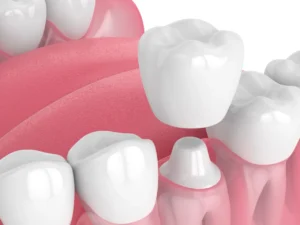
A dental crown is a cap that covers the entire tooth down to the gum line. Unlike veneers and bonding, which address only the visible front surface, a crown restores the full shape and strength of a tooth that has been significantly damaged or weakened.
Crown placement requires the most tooth preparation of the three options. The tooth is shaped on all sides to create space for the crown to sit over it. This is more involved than veneer preparation, and the change to the natural tooth structure is substantial.
Crowns may be recommended when:
- A tooth is badly decayed or cracked to the point where a filling or veneer is not sufficient
- A tooth has had root canal treatment and needs protection from fracture
- A significant portion of the tooth structure has been lost
- The tooth needs both functional restoration and cosmetic improvement
Crowns can be made from porcelain, zirconia, or a combination of metal and porcelain, depending on the location of the tooth and the clinical requirements. They are durable and, with appropriate care, can last many years. However, the extensive preparation involved means the decision to place a crown is not taken lightly, and a full assessment is needed before it is recommended.
How Do the Three Options Compare?
The main difference between the three options comes down to how much of the tooth is involved and what the treatment is designed to achieve.
The degree of tooth alteration involved varies between the three options and is one of the main factors that determines which is appropriate. A general way to understand the difference:
- Bonding works by adding to the tooth and is suited to minor, localised concerns
- Veneers cover the front surface and are suited to broader cosmetic changes across multiple teeth
- Crowns cover the entire tooth and are suited to structural repair alongside cosmetic improvement
This is a rough framework only. A tooth that appears to only need a cosmetic solution may, on examination, require structural support that only a crown can provide. Conversely, a tooth that appears significantly damaged may still be suitable for a more conservative approach in some cases.
What About Longevity and Maintenance?
The lifespan of all three options depends on the material used, how well they are maintained, and individual habits such as teeth grinding or biting into hard foods.
Caring for dental restorations involves the same foundational habits as general oral hygiene: brushing twice daily with fluoride toothpaste, cleaning between teeth, and attending regular dental check-ups. Some additional considerations apply:
- Composite bonding may need polishing or replacement sooner than porcelain options and is more prone to staining from food and drink
- Porcelain veneers are more resistant to staining and, with appropriate care, can last considerably longer than composite alternatives
- Crowns are durable and designed to withstand the demands of chewing, though they still require ongoing hygiene maintenance and periodic review
No dental restoration lasts indefinitely. Regular dental appointments allow the condition of any bonding, veneer, or crown to be monitored and any concerns to be identified early.
Which Option Is Right for Your Situation?
This is a question that cannot be answered without a clinical assessment. The decision depends on factors that are specific to each tooth, including how much enamel is present, whether the tooth is structurally sound, what cosmetic changes are being considered, and what the realistic expectations are for longevity.
As a broad guide: the more minor and localised the concern, the more likely a conservative option such as bonding may be sufficient. The more extensive the change, or the more the tooth needs structural protection, the more likely a veneer or crown will be recommended.
Your dentist will assess the health of the tooth and surrounding gum before recommending any treatment, and will discuss the options, risks, and realistic outcomes for your specific situation.
A Considered Approach at West Dental & Implants
At West Dental & Implants, our dentists take time to assess the condition of your teeth before discussing any cosmetic treatment options. That process includes a clinical examination, digital planning where relevant, and a conversation about what is realistic for your specific teeth and concerns before any work begins.
If you have been thinking about whether bonding, veneers, or a crown may be appropriate for a tooth, we welcome you to call us on (03) 7003 2523 or book a consultation online.

Frequently Asked Questions
What is the main difference between veneers, crowns, and bonding?
The key difference is how much of the tooth each option covers and what it is designed to achieve. Bonding adds composite resin to the tooth surface and is suited to minor cosmetic concerns. Veneers cover the front surface of the tooth and are used for broader cosmetic changes. Crowns cover the entire tooth and are used when structural repair is also needed. The appropriate option depends on the condition of the tooth and what the treatment is intended to address.
Is composite bonding reversible?
Composite bonding is generally considered the most conservative of the three options because it typically involves little or no removal of natural tooth enamel. In many cases, it can be removed or replaced without significant impact to the underlying tooth. Whether it is reversible in a specific case depends on how it was applied and the condition of the tooth at the time. Your dentist can advise on this during a consultation.
How long does each option last?
Longevity varies depending on the material, the tooth’s position, individual habits, and how well the restoration is maintained. Composite bonding typically requires more frequent maintenance than porcelain options and may need to be refreshed or replaced within a few years. Porcelain veneers and crowns can last considerably longer with appropriate care, though neither lasts indefinitely. Individual outcomes vary.
Note: Any surgical or invasive procedure carries risks. Before proceeding, you should seek a second opinion from an appropriately qualified health practitioner.
References
Healthdirect Australia. (2025). ‘Dental Crown Procedure’. Healthdirect Australia, February. Sydney, NSW: Australian Government. https://www.healthdirect.gov.au/dental-crown-procedure
Better Health Channel. (n.d.). ‘Cosmetic Dentistry and Teeth Whitening’. Better Health Channel. Melbourne, VIC: Victorian State Government Department of Health. https://www.betterhealth.vic.gov.au/health/conditionsandtreatments/cosmetic-dentistry-and-teeth-whitening
Australian Dental Association. (n.d.). ‘Crowns, Bridges and Veneers’. Teeth.org.au. Sydney, NSW: Australian Dental Association. https://teeth.org.au/crowns-bridges-and-veneers
Australian Dental Association. (2025). ‘Policy Statement 2.2.3: Oral Hygiene’. Australian Dental Association, October. Sydney, NSW: ADA. https://ada.org.au/policy-statement-2-2-3-oral-hygiene