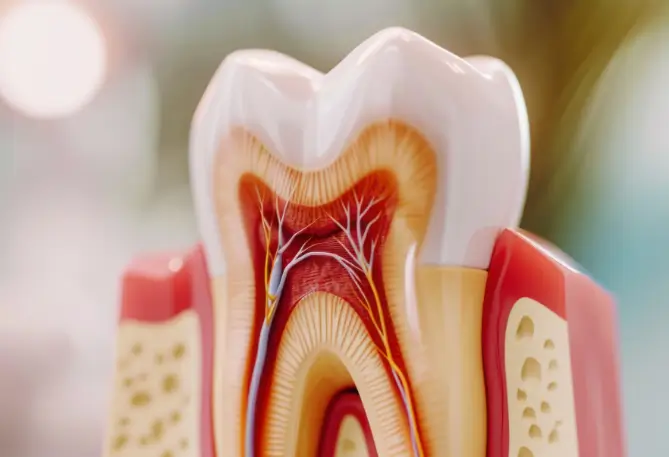
Tooth pain and sensitivity can occur when the inner part of a tooth becomes inflamed or infected. Root canal treatment is used to remove infection from inside the tooth, relieve discomfort, and help retain the natural tooth structure.
What Is Root Canal Treatment?
Root canal treatment is a dental procedure that treats infection or inflammation within the pulp of a tooth. The pulp is soft tissue in the centre of the tooth containing nerves and blood vessels. If the pulp is damaged, the inner part of the tooth is cleaned and sealed to stop infection from progressing further.
This treatment focuses on removing infected tissue and protecting the remaining tooth structure so the tooth can remain in place. Because the pulp is located inside the tooth, treatment is performed within the tooth to remove infection and seal the space. Sealing the tooth helps prevent bacteria from entering the tooth again.
When Is Root Canal Treatment Needed?
You may need root canal treatment when the pulp inside a tooth becomes infected or inflamed due to deep decay, repeated dental procedures, cracks, or injury. Common signs may include tooth pain, sensitivity to hot or cold, swelling, or discomfort when biting. Some teeth may also become darker in colour or develop a small pimple-like swelling on the gums.
In some cases, there may be no pain, but infection may still be present. Some people may also notice pressure when chewing or discomfort that does not settle. If left untreated, the infection may spread to the surrounding bone and may lead to further dental problems over time.
What Is the Root Canal Treatment Procedure?
At our dental practice in Hoppers Crossing, the root canal treatment procedure begins with examining the tooth and taking X-rays to assess the root canals and surrounding bone. The area is numbed before a small opening is made in the tooth to access the infected pulp.
The canals are cleaned, shaped, and disinfected to remove bacteria and damaged tissue. We then fill the canals with a sealing material to prevent reinfection. In many cases, a crown is recommended after treatment to protect the tooth from fracture and restore normal function.
What Are the Risks Of Root Canal Treatment?
Root canal treatment is commonly performed, but like all procedures, it carries some risks and possible complications.
Common Side Effects
Mild discomfort, tenderness when biting, or sensitivity may occur after treatment. These symptoms usually settle within a few days as the surrounding tissues heal, and the tooth adjusts.
Rare Complications
In some cases, infection may persist or return if complex canal anatomy makes cleaning difficult. Occasionally, a tooth may become brittle over time and require further restoration. Regular review appointments are important to monitor healing and identify any concerns that may require additional treatment.
What Are the Benefits Of Root Canal Treatment?
Root canal treatment allows a tooth affected by infection to be treated and continue functioning. Keeping the natural tooth helps maintain normal chewing function and reduces the movement of nearby teeth. After restoration, the treated tooth helps maintain bite balance and overall tooth stability. This helps avoid the need for tooth removal and more complex tooth replacement options. Keeping your natural tooth also helps maintain the natural appearance of your smile.
Frequently Asked Questions
Why do I get throbbing pain when I eat something hot or cold?
You may get throbbing pain when you eat hot or cold food because the damaged pulp inside the centre of the tooth may be inflamed. This type of pain often lingers after eating and may become more frequent over time, which is why it should be checked before the problem becomes worse or spreads further.
What happens if the nerve inside my tooth has died?
If the nerve inside your tooth has died, the dead pulp can lead to infection and may need root canal therapy to treat the problem. Treating the issue early helps protect other teeth and reduces the chance of needing more complex treatment later to restore function.
Is endodontic treatment different from a normal filling?
Yes, endodontic treatment is different from a normal filling because it treats infection inside the pulp tissue rather than repairing the outer surface of a tooth. By removing infection and sealing the inside, this treatment helps protect your oral health and allows the area to remain functional.
Can I eat normally after a root canal?
Yes, you can eat normally after a root canal, but start slowly and avoid biting directly on the treated tooth until our dentist advises it is ready for normal use. Sensitivity can occur for a short time while the surrounding tissues settle after the procedure.
Are you part of any professional dental associations?
Yes, we are members of professional organisations such as the Australian Dental Association. We follow professional guidelines, complete ongoing education, and stay updated with current standards in dentistry so our patients receive care that aligns with recommended clinical practices and professional guidelines.
Note: Any surgical or invasive procedure carries risks. Before proceeding, you should seek a second opinion from an appropriately qualified health practitioner.Lorem ipsum dolor sit amet, consectetur adipiscing elit. Ut elit tellus, luctus nec ullamcorper mattis, pulvinar dapibus leo.
Flexible Payment Options to Suit Your Needs
At West Dental & Implants, we offer flexible payment options to help make treatment more affordable. We accept all major health funds and are a preferred provider for NIB. Payments can be made via HICAPS, HUMM, cash, or credit, and eligible patients may be able to access superannuation early. Our goal is to help you move forward with treatment in a way that feels manageable for you.